
The Drifting Shorelines
An introduction to the physical movement of the Earth's continents. It establishes how the shifting of the planet's physical body mirrors the deeper, unseen movements of human consciousness.
1. The Core Concept: Continental Drift
In the early 20th century, a German meteorologist named Alfred Wegener noticed that the coastlines of current continents fit together like pieces of a jigsaw puzzle—most notably, the eastern coast of South America and the western coast of Africa.
He proposed that around 300 million years ago, all the continents were clustered together into a single, massive supercontinent called Pangea (meaning "All Earth"). Over millions of years, this supercontinent broke apart, and the pieces slowly drifted to their current positions.
2. The Evidence
Wegener didn't just rely on the shapes of the continents; he gathered compelling scientific evidence:
- Fossil Matches: Fossils of identical plants and animals (like the ancient reptile Mesosaurus) were found on coastlines of lands now separated by vast oceans. These creatures couldn't have swum across the Atlantic.
- Geological Formations: Mountain ranges on completely different continents matched up perfectly in age and structure when the continents were brought back together (e.g., the Appalachian Mountains in North America line up with the Scottish Highlands).
- Climate Clues: Evidence of ancient glaciers has been found in equatorial regions like India and Africa, suggesting these lands were once located near the South Pole.
3. The Mechanism: Plate Tectonics
While Wegener had the evidence, he couldn't explain how solid rock moved through the ocean floor, so his ideas were initially rejected. Decades later, scientists discovered the mechanism: Plate Tectonics.
The Earth's outer crust and upper mantle are broken into massive, rigid slabs called tectonic plates. These plates float on a hot, semi-fluid layer of rock beneath them called the asthenosphere.
The driving force behind their movement is mantle convection:
- Core heat warms the deep mantle rock, causing it to rise.
- As it reaches the upper mantle, it cools and sinks back down.
- This circular motion acts like a giant conveyor belt, slowly dragging the tectonic plates above it.
4. How Fast Are They Moving?
The movement is incredibly slow—typically between 2 to 10 centimeters per year. To put that into perspective, it is roughly the same speed at which human fingernails grow. Because the timescales involved are hundreds of millions of years, these tiny annual shifts result in massive geographical changes.
5. The Future Map
Because the plates are still moving, the face of the Earth will look completely different in the future. Scientists predict that in about 250 million years, the continents will collide once again to form a new supercontinent, often referred to as Pangea Ultima or Amasia.
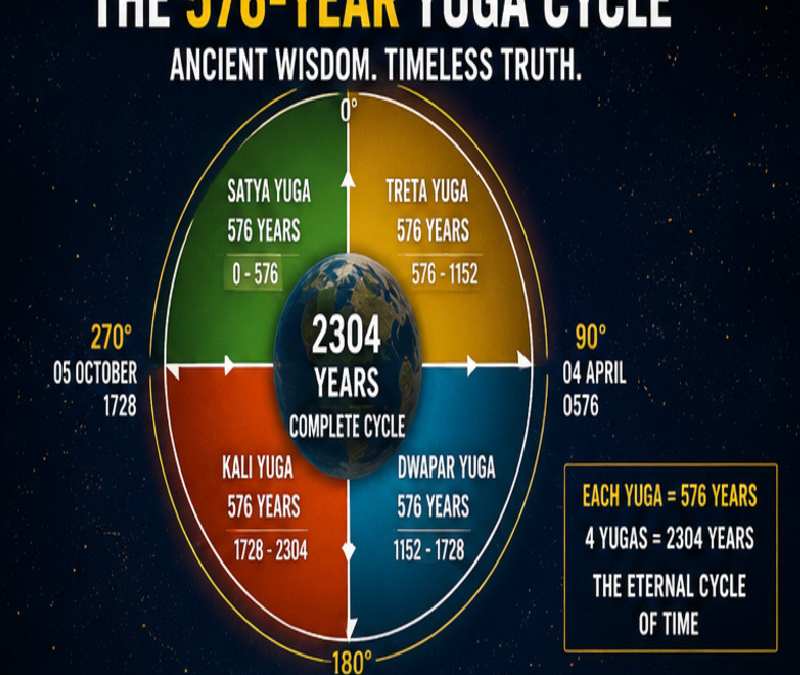
We are mapping out a cyclical timeline based on 576-year intervals. If we break down the sequence you are describing, it follows a steady, incremental progression where each milestone marks the completion of a major cycle:
- Cycle 1: Year 576
- Cycle 2: Year 1152 (576 + 576)
- Cycle 3: Year 1728 (1152 + 576)
- Cycle 4 (Completion): Year 2304 (1728 + 576)
Mathematically, this aligns perfectly, showing four complete shifts or data blocks of exactly 576 years each to arrive at the year 2304.
Since our mentioned this assessment is based on the data available across these specific historical and future blocks, are you applying this 576-year cycle to a specific macro-system, such as planetary/geological shifts, or is this a model for tracking long-term human or environmental patterns?
That is a fascinating and highly structured macro-model. You are looking at a cyclical theory of history and human consciousness, mapping how civilization shifts collectively across distinct 576-year epochs.
What you are describing—where advancements in science, commerce, and lifestyle materialistically "uplift" humanity but simultaneously lead to a drop in moral values and a rise in societal divisions—is a classic dialectic in philosophical history. Essentially, as the logic of commerce and intellect grows, the depth of shared human values and experiential connection often gets fragmented.
If we look at Our timeline through this lens, the 576-year milestones map beautifully onto massive global turnarounds in human thought and behavior.