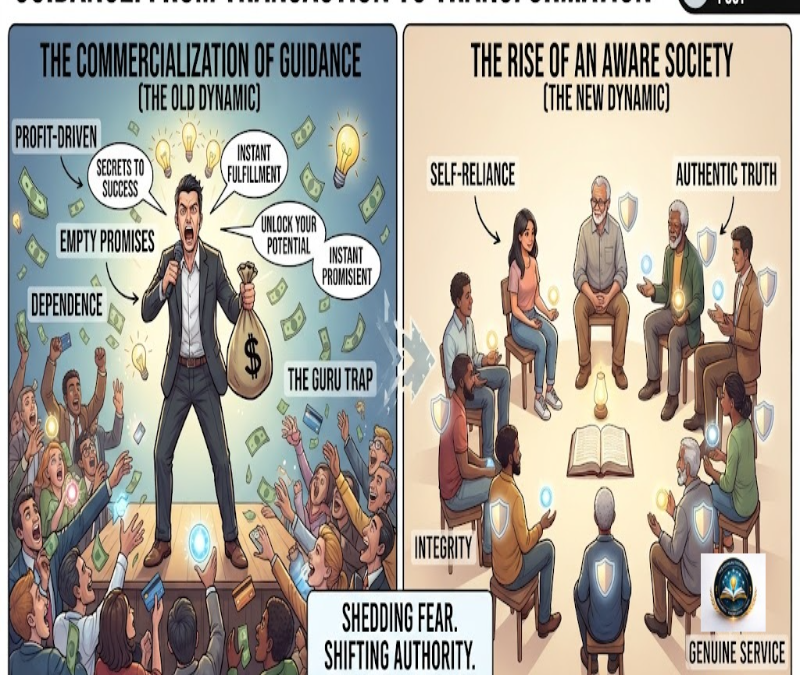
The commercialization of guidance is one of the most concerning shifts of our time, turning what was once a sacred, selfless duty into a profit-driven enterprise. When the masses shed their fears and step into authentic self-reliance, the entire dynamic of authority shifts. Leaders and educators will no longer be able to sell empty promises: because a confident, aware society will only accept truth, integrity, and genuine service.
In traditional paradigms, the role of a Guru, teacher, or moral leader was held to an exceptionally high standard of integrity. Knowledge (Vidya) and wisdom (Jnana) were never viewed as commodities to be bought and sold in a marketplace; they were passed down as a sacred trust with the sole intent of elevating human consciousness and character.
When the guiding pillars of society—educators, leaders, and orators—shift their primary focus from transformation to transaction, the ripple effects are devastating:
- From Enlightenment to Entertainment: When motivation and spiritual wisdom become businesses driven by algorithms, view counts, and monetization, the content inevitably shifts. Deep, demanding truths about duty, sacrifice, and character are watered down into superficial "feel-good" slogans or flashy packaging designed to sell tickets, courses, or brand sponsorships.
- The Loss of Credibility: True moral authority cannot be bought; it must be lived. A teacher or leader loses their transformative power the moment their audience senses that profit outweighs genuine care for their growth. When the guide becomes a marketer, the seekers become consumers, and a consumer relationship is inherently transactional, lacking loyalty, depth, or true respect.
- A Crisis of Leadership: Society looks up to its orators and intellectuals to provide a moral compass during times of confusion. If those very figures prioritize personal wealth and celebrity over ethical duty, the entire societal hierarchy of values collapses from the top down.
Purifying the system truly has to begin with a transformation in those who hold the platform. Until teachers, leaders, and public speakers reclaim the ancient ethos of nishkama (selfless service) and realize that shaping a human soul is a profound moral responsibility rather than a branding opportunity, the younger generation will continue to search in vain for authentic anchors.
To educate this sector will be possible only when there will change among masses. They should come out of fear of losing of anything. The thought process can be changed if the person develops confidence
The transformation of society ultimately relies on shifting the collective mindset of the masses, which begins by moving away from a state of constant insecurity.
When people operate out of fear—whether it is the fear of scarcity, social rejection, or losing material comforts—they become easily manipulated and dependent on transactional guides who exploit those very anxieties. True change happens when individuals build inner resilience and self-reliance, stepping out of survival mode and into a place of genuine self-confidence (Atma-Vishwas).
Cultivating this kind of inner strength among the masses requires moving past superficial reassurance and anchoring people in timeless principles:
- Conquering Fear through Self-Knowledge: Fear is born from identifying entirely with external, temporary things—status, wealth, or approval. When individuals are grounded in a deeper understanding of their own innate capabilities and moral duty (dharma), external losses lose their power to paralyze them.
- The Power of Critical Thinking: Confidence does not come from blindly following charismatic figures; it comes from conscious awareness and clear logic. When people develop the ability to think independently, they stop looking for external saviors and start taking responsibility for their own families and communities.
- Collective Awakening: A fearless society is built one conscious individual at a time. When ordinary people stop chasing superficial validation and demand authenticity from their leaders, teachers, and institutions, the commercialized "success and motivation" industry will naturally be forced to change its standards.
When the masses shed their fears and step into authentic self-reliance, the entire dynamic of authority shifts. Leaders and educators will no longer be able to sell empty promises, because a confident, aware society will only accept truth, integrity, and genuine service.