
Description
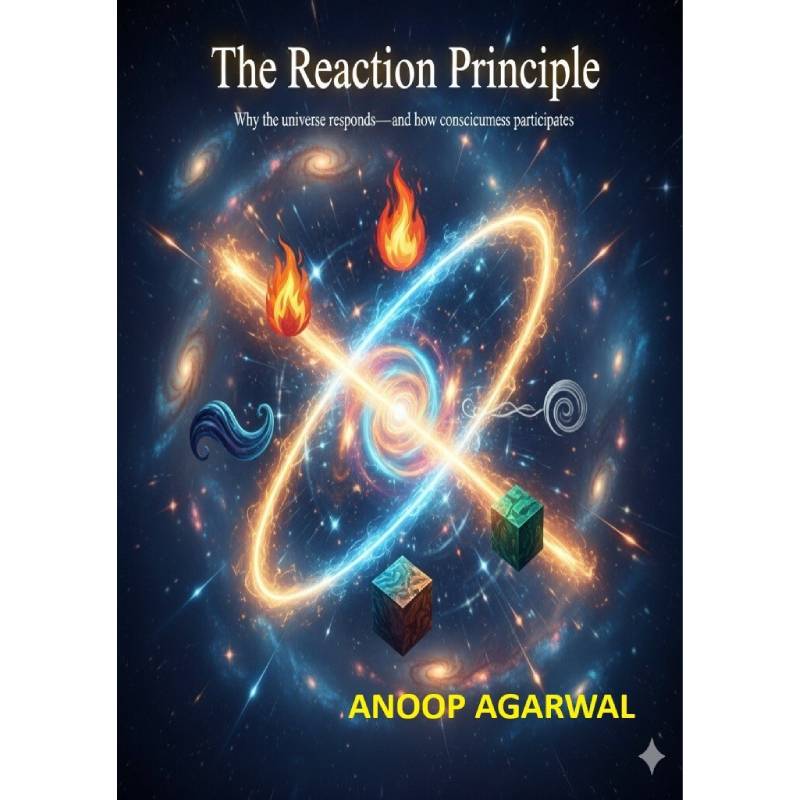
Here’s what modern science offers as leading attempts to explain “why actions and reactions exist at all” — essentially, why the universe has laws and why cause-and-effect is possible:
1. Big Bang Cosmology: Suggests the universe (and all physical laws) began 13.8 billion years ago from a singularity. Does not explain why the Big Bang happened or why the laws took their specific form.
2. Quantum Fluctuation Theory: Proposes the universe spontaneously emerged from a quantum vacuum — “nothing” that still has energy. Cause-and-effect itself might be a property of quantum fields.
3. Anthropic Principle: The laws are the way they are because only a universe with these laws could give rise to observers like us. Critics say this just restates the mystery, not explains it.
4. String Theory / M-Theory: Attempts to unify all forces and particles into one underlying framework. Suggests that what we call “laws” emerge from deeper vibrational patterns of tiny strings. Still unproven.
5. Multiverse Hypothesis: Proposes many universes exist, each with different laws of physics. We live in one where actions and reactions allow stable matter and life.
6. Self-Organizing Principle: Suggests that order, complexity, and cause-effect relationships naturally arise in any system governed by mathematics and energy flow (e.g., seeds becoming trees, galaxies forming).
7. Law Without Law (John Wheeler): Suggests that even the laws of physics might not be fundamental; they “evolve” from information and observations (“it from bit”). Actions and reactions exist because the universe is a web of information processing itself.
8. Consciousness-First Hypothesis: A minority view: Consciousness (or “awareness”) is the primary reality, and physical laws, including action and reaction, emerge within it. Resonates with ancient philosophical traditions (Vedanta, Taoism).

Reviews
There are no reviews yet.